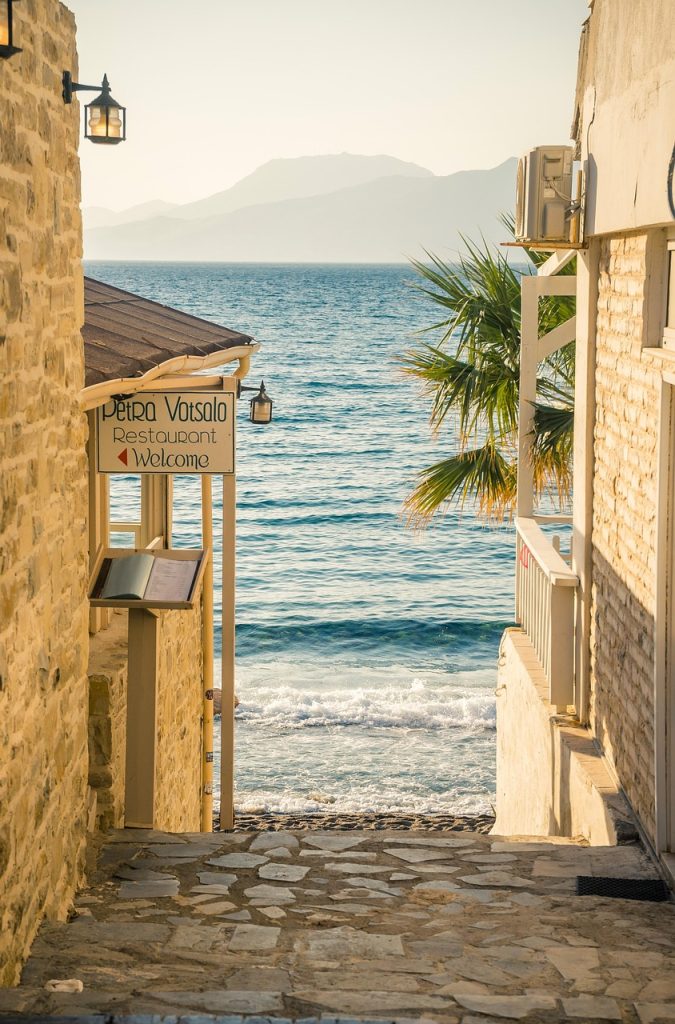
Most Amalfi Coast itineraries are hit lists with a view. They send you to Positano, Amalfi, Ravello, and Capri in whatever order fits a calendar, then leave you stranded in a SITA SUD queue or a ferry stampede. The coast does not work that way. It rewards order, timing, and the discipline to leave a town before it empties or fills. This guide sequences a single-destination week so you spend your hours on the water, in the piazzas, and on the paths, not in transit.
Across the sections ahead, you will learn why the best itinerary is a sequence, not a hit list; how to choose season, base town, and booking order; and how to shape seven days. We will cover Days 1 and 2 in Positano, Day 3 in Amalfi and Ravello by SITA SUD bus, Day 4 as the private boat day, Day 5 on Capri and the islands with transit cost included, Day 6 in Praiano or on the Path of the Gods, and Day 7 for leaving well, plus the Metro del Mare extension. You will also get rules for ferry versus private driver by leg, boat days that do not burn the week, and shoulder season timetables. Sequence the week, then let the coast set the pace.
Why the Best Amalfi Coast Itinerary Is a Sequence, Not a Hit List
The coast runs west to east along one road and one ferry line. Distance is not the constraint; order is. Positano to Amalfi is a short sea hop at the right hour and a stop-and-go crawl at the wrong one, and timetables, not preference, decide which you get.
A hit list treats Positano, Amalfi, Ravello, Praiano and Capri as interchangeable ticks. They are not. Ravello sits above the coastline on the SITA SUD route covering Scala, Ravello and Amalfi, while the waterfront towns connect mainly by water. Each has its own access logic and its own working hour.
Sequencing, not stamina, separates a luxury week from a queue: fewer stops, longer dwell times, one base at a time instead of three hotel changes in seven days.
Hence the rule this itinerary defends throughout: never more than one water crossing in a day unless the second crossing is the return leg.
Prerequisites: Season, Base Town, and Booking Order
Season first. Travelmar advertises year-round sailings, but shoulder-season crossings often run lighter and weather-dependent in traveler reports, so treat spring and fall sea travel as provisional until an operator confirms it. Verify every timetable and fare within two weeks of departure; much online material is operator-marketed or anecdotal.
Pick two bases maximum: Positano or Praiano for the western coves, Amalfi for the town and the SITA SUD bus up to Ravello. Book accommodation first, then boats and transfers, then day trips. Book accommodation first, premium rooms, including Forbes-rated stays, tend to fill earlier than movable day trips. summer vacation ideas covers high-season alternatives.
The same three operators, SITA SUD buses, Travelmar ferries, and Metro del Mare’s summer Cilento service, are covered in detail in the transport sections below.
The Week at a Glance: Seven Days, Sequenced
The sequence that follows places each day by transit cost, not by attraction.
Days 1 and 2: Land and stay put. Base in Positano or Praiano. No long road leg on arrival day; one short water crossing maximum.
Day 3: Amalfi, then Ravello. Amalfi in the morning, Ravello by SITA SUD bus in the afternoon, back down the hill before evening bus crowds build. Check SITA SUD schedules the day before.
Day 4: Private boat, boarded from your own base. Mid-week placement makes it your weather buffer.
Day 5: The island day. Capri or a shorter crossing, costed as a full transit day, not a half day with a boat in it.
Days 6 and 7: Low transit, then leave well. One slow day at Praiano or on the Path of the Gods; a departure day that can absorb a Metro del Mare run toward Cilento if the summer window is open.
Days 1 and 2: Arrival, Positano, and Resisting the First Temptation
With the week mapped, the first two days do one job: settle without spending the week’s best hours in transit.
Arrival is the largest fixed time cost, so time road transfers from Naples or Salerno to avoid the coastal road into Positano across the middle of the day.
Day 1 is check-in, a swim, dinner in town. Resist the ferry departure visible from the dock; a day trip on arrival undoes the rest.
Day 2 stays local: buy ferry tickets at the port, confirm departure points, and use the operator boards, not a blog from a previous season.
Want one early walk? Take the Path of the Gods from Bomerano down toward Nocelle in the morning, before heat and crowds.
Two nights in the same bed matters more than ground covered: the western coast rewards staying still and keeps your first boat day cheap in transit.
Day 3: Amalfi in the Morning, Ravello by SITA Bus
Day 3 heads inland. Ravello is a bus day, not a boat day. SITA SUD’s route list pairs Scala, Ravello and Amalfi, with connections to Salerno and Naples, so keep it a road day.
Start in Amalfi. The town square, the Duomo and the lanes behind the waterfront are quietest before the mid-morning arrivals.
Then ride up to Ravello for the villa gardens and the view back down over the coastline. It runs cooler and slower than the waterfront, and earns the half day it costs.
Come down well before the last useful bus. SITA SUD publishes timetables as PDFs, and the schedule is updated seasonally, so confirm the day’s times at the ticket point rather than from a screenshot. Tickets are sold by partners displaying the SITA SUD logo. Buy the return leg up front, let lunch length follow it.
Tomorrow: the private boat day, placed mid-week.
Day 4: The Private Boat Day, Placed Where It Counts
After a road-heavy Day 3, Day 4 stays on the water.
A private boat buys itinerary control: you pick the coves, swim stops and lunch town rather than a fixed departure and return. Place it midweek; day one wastes it on travel fatigue, and a final-day boat can’t shift if the sea turns.
Route between your own base and one neighboring stretch: Praiano’s inlets and the Li Galli islets, or Amalfi plus a swim stop. Our complete travel planning guide covers the booking order; romantic adventure getaways and first surf trips show how curated beats covering ground.
Published boat, driver, transfer and ZTL figures are unreliable, so request quotes directly and confirm in writing what fuel, skipper and hours include.
For a lower-effort alternative, Travelmar also offers fixed-departure group excursions along the coast; check its current schedule for inclusions and return times.
Day 5: Capri and the Islands, With the Transit Cost Included
Capri functions in the ferry network as a destination rather than a short hop, and crossing times were not verifiable in this research. Confirm the operator’s own timetable before designing a day around it.
Cost that day honestly: an island crossing from Positano or Amalfi claims the morning outbound and the evening return, so it consumes a full day, not half of one. Choose Capri or a mainland water day, never both, unless you are deliberately trading coast time for sea time. If the coastline is your reason for coming, give the day back to Ravello or Praiano, where transit cost approaches zero. Either way, treat it as the week’s second water day, with a clear day on each side.
Considering an island reset instead? how to choose Maldives honeymoon packages explains what’s included, and which luxury honeymoon suits your couple matches the trip to you.
Day 6: Praiano, the Path of the Gods, or a Deliberate Slow Day
After an island day, give the week back to the water you are already on. This low-transit day is not filler; it is the buffer that protects your boat day when weather shifts, and shoulder-season wind can make that shift a real possibility.
Praiano is the relaxed version: a short ferry hop from Positano or Amalfi, a slow descent to the water, and a long lunch within walking distance of your base. The Path of the Gods is the active version. The same Bomerano-to-Nocelle direction applies here; arrange pick-up in advance.
Keep the day unbooked on purpose. Late-week flexibility beats one more reservation, especially if your boat day already moved once. If the week runs smoothly, add the stop you cut; that is far cheaper from a fixed base than from a hotel you have left.

Day 7: Leaving Well, Plus the Metro del Mare Extension
Your slow day sets up a departure on the water, not the coastal road. Metro del Mare returned on 13 June 2026. Line A1 runs Monday to Friday from 15 June to 4 September 2026, linking Salerno, Agropoli, San Marco di Castellabate, Amalfi and Positano. Line A2 runs weekends to Acciaroli. Published timings: Salerno 07:45, Amalfi 10:39, Positano 10:54; return Positano 17:07, Salerno 20:15. This is the close-the-loop move: a departure day on the water, or a genuine Cilento extension with a second week. It is summer only, so April and October trips cannot lean on it. Confirm dates and times with the operator before building your final day around a seasonal service.
Ferry or Private Driver: Choose by Leg, Not by Loyalty
Now match each leg to its mode, not your loyalty to one.
Sea legs, Positano to Amalfi, Amalfi toward Salerno, and any island crossing, belong to ferries. Travelmar (year-round, all tourist ports, as noted above) handles the sea legs, though shoulder-season sailings are lighter and weather-dependent.
Land legs, Ravello, Praiano’s upper lanes, and airport transfers, belong to the road. A private driver earns its cost on legs ferries cannot serve: Ravello’s uphill approach, early departures, and late returns after the last boat. Rates, ZTL rules, and transfer times could not be verified here; quote directly and get conditions in writing.
Buses are the value option: SITA SUD via Scala remains the bus backbone for Ravello, practical but slower and far busier midday.
Take the boat when the destination is across water and your base sits on it; take the road when it’s uphill, inland, or after hours.
Boat Days Without Burning the Week: Rules That Hold
With each leg assigned to sea or road, the final discipline is how many boat days the week can absorb.
- The mid-week private boat day (Day 4) is enough; a second private charter rarely adds proportionate value.
- Never place two water days back to back. On a windy morning, back-to-back water days leave you with no fallback.
- Board in the town where you sleep. A crossing just to reach the dock spends the morning before the good part.
- Use boats to replace road movement, not add to it. A swim stop that doubles as a transfer removes a bus or car leg.
- Keep private and group options separate. Private buys control and a custom route; a group day buys simplicity and a fixed return.
Treat these as judgment calls; the season decides how firmly they hold.
Shoulder Season: April, October, and Weather-Dependent Timetables
Shoulder season changes that arithmetic: lighter crowds and softer rates against thinner, weather-dependent ferry timetables. Travelers planning April trips ask whether boats and shops will run; some travellers report reduced spring schedules and wind-related cancellations, treat that as anecdote, not operator policy, and confirm with the ferry company before booking a non-refundable day around a crossing.
April and October fall outside the Metro del Mare window (June–September), so plan a road-based farewell day instead. Season-first thinking also governs choosing a surf destination that matches your level and season.
SITA SUD updates its schedule several times a year, with more departures in June–August, but its own site is not in English, so check its latest releases through a local ticket partner.
Build shoulder-season weeks with one unbooked day and a road-based alternative for every boat plan, so a cancellation costs a rearrangement, not a day.
Conclusion: Sequence the Week, Then Let the Coast Set the Pace
Peak or shoulder, three rules decide whether the week works.
Two bases, not five. Every hotel change costs half a day and drops you back on the coastal road at the worst hour.
Keep crossings to one per day (the return leg excepted), as argued throughout.
Verify before you commit. Confirm every SITA SUD bus time, Travelmar sailing and Metro del Mare date with the operator, and get private boat and transfer quotes in writing with fuel, skipper and hours specified.
Book accommodation first, day trips last, one day deliberately empty. Smart Alec Travel builds on this sequence, from Forbes-rated hotel stays to honeymoon and couples-focused getaways.
The coast rewards order and timing over a long list of stops. Sequence it properly and the week looks unhurried on paper and feels unhurried in practice.