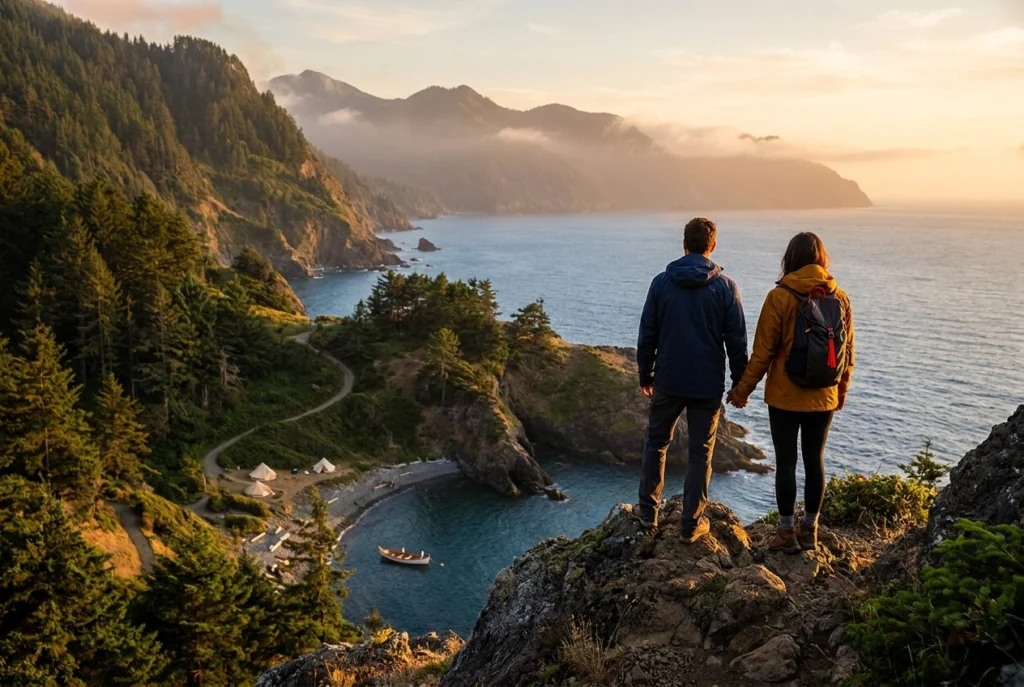
Have you ever caught yourself scrolling through travel photos late at night, thinking “I wish I could do that someday”? We all have those dream trips tucked away in the back of our minds, the ones that feel almost too magical to be real. That’s exactly what a bucket list is all about.
A bucket list is simply a collection of experiences you want to have before you die, and travel is one of the most popular categories for good reason. Seeing the world opens your mind, creates unforgettable memories, and honestly makes for the best stories at dinner parties.
But here’s the thing: many people assume bucket list travel is only for the ultra-wealthy or the super adventurous. That’s simply not true. Whether you’re a first-time traveler or someone who has only ever taken local road trips, there are incredible experiences out there waiting for you.
In this post, we’re breaking down some of the most breathtaking bucket list travel experiences that are genuinely worth saving up for. Get ready to start planning your next great adventure!
Why Your Bucket List Deserves More Urgency Than You Think
Here’s something most travel content won’t tell you: waiting is not the safe choice.
Most people treat their bucket list like a savings account, something to dip into “someday” when the timing feels perfect. But the world your dream trips exist in is changing faster than most of us realize, and the case for acting sooner rather than later has never been stronger.
The global luxury travel market is valued at USD 2,556 billion in 2026 and is projected to nearly double to USD 4,797.96 billion by 2036, growing at a 6.50% CAGR. What that number actually means for you is straightforward: more travelers are competing for the same extraordinary experiences. As demand accelerates, access to truly exclusive itineraries tightens. The best suites, the most sought-after expedition routes, the private villa over the water. These do not scale with demand.
Then there is the environmental reality. Travel creators and researchers alike are now openly discussing iconic destinations having a kind of physical expiration date. Venice has installed flood barriers to combat rising sea levels. The Great Barrier Reef has experienced repeated mass bleaching events that have permanently altered entire sections of the ecosystem. Wilderness destinations like Machu Picchu and Patagonia now operate under strict daily visitor permit caps. Two-thirds of travelers already say they would avoid a popular destination if they knew it would be crowded, and that number is only rising as overtourism controls become more common. According to the American Express 2026 Global Travel Trends Report, intentional and experience-led travel is reshaping how and when people choose to go.
The personal timing piece matters just as much as the environmental one. Milestone birthdays, anniversaries, career transitions, and recovery from illness are among the most powerful psychological triggers for finally booking that trip you have been thinking about for years. Travel in 2026 is increasingly being described as “Whycations,” trips defined by personal meaning rather than geography. The question has shifted from where to go, to why now. And the honest answer is usually: because life keeps moving whether you do or not.
This “now-or-never” framing is largely absent from premium travel content, and that gap is exactly what this post is here to fill. The Explore Worldwide 2026 Travel Trends report reflects a broader industry shift toward purposeful, experience-first travel. Smart Alec Travel was built on the belief that the best experiences require a human guide rather than a search engine. That premise starts here, and it starts with understanding why your bucket list deserves your attention right now, not later.
Stay at a Forbes-Rated Hotel at Least Once
There is a reason people remember a truly exceptional hotel stay for years. Forbes Travel Guide evaluates properties against up to 900 individual criteria, with a deliberate emphasis on service quality over physical facilities. Anonymous inspectors stay a minimum of two nights and assess everything from how staff anticipate needs before guests voice them, to room cleanliness, response times, and the warmth of every interaction. The difference between a Forbes-rated property and an unrated one is not subtle. You feel it within the first five minutes.
Forbes-rated properties span 90 countries across the 2026 Star Awards, with recognized hotels concentrated in destination heavyweights like the Maldives, Tokyo, Paris, New York, and Dubai. That concentration is actually useful for bucket list planning. Choosing a Forbes-rated hotel gives you a natural anchor point, and you can build an entire itinerary around that one confirmed, quality-verified experience rather than piecing together a trip from online reviews alone.
Here is what no review algorithm will ever replicate: the feeling of having your preferences remembered from check-in, receiving a room upgrade you did not ask for, or finding your evening plans quietly arranged before you thought to ask. That level of proactive, personalized service is precisely what the Forbes rating system is designed to measure and reward. It explains why so many experienced luxury travelers continue to book through specialist channels rather than generic online platforms.
Smart Alec Travel includes curated access to Forbes-rated hotel stays as part of its premium service offering. Rather than relying on algorithm-generated suggestions, a real travel advisor matches the right property to your specific travel style, budget, and timing.
Practical tip: the most famous Forbes-rated properties are not always your best option. A skilled advisor can identify lesser-known rated hotels in the same tier, properties with comparable service standards, far better availability, and significantly stronger value. The 2026 Forbes Travel Guide covers destinations as unexpected as Kiawah Island, Brunei, and Nashville. The hidden gems are there. You just need someone who knows where to look.
Take a Luxury Cruise to Somewhere You Could Not Otherwise Reach
If your mental image of a cruise involves a buffet line and a poolside trivia contest, it is time for a serious update. The cruise industry in 2026 looks dramatically different from that stereotype, and the most exciting corner of it is purpose-built for bucket list travelers who want to reach places that a commercial flight simply cannot take them.
Expedition-style cruises heading into 2026 and beyond are accessing Antarctica, the Chilean fjords, remote Pacific island chains, the Kimberley Coast of Australia, Svalbard, and Greenland. These are not detours. They are the entire point. Antarctica, for example, has no commercial leisure flight access whatsoever. The only way to set foot on the seventh continent is by ship, making a luxury expedition cruise genuinely irreplaceable as a bucket list vehicle.
The onboard experience on a premium expedition vessel is built around intimacy and personalization, which aligns perfectly with the 2026 “ultra-personalised retreat” trend that is reshaping how travelers choose their big trips. Think dedicated naturalists and glaciologists giving talks on deck, specialty dining served to a small group of fellow travelers, and shore excursions led by expert guides rather than a tour company rep with a flag. This is not mass tourism; it is a curated journey shaped around what you actually want to see and do.
There is also a practical structural advantage worth flagging. A single Chilean fjords and Antarctica itinerary can deliver Cape Horn, Patagonia, and the Antarctic Peninsula in one seamless trip. You unpack once, maintain a consistently high comfort baseline, and move between extraordinary destinations without the friction of repeated hotel check-ins and transfer logistics.
One detail that genuinely changes the experience is ship size. Smaller vessels, carrying fewer than 500 passengers, can access tighter fjords, anchor near uninhabited coastlines, and use Zodiac landing craft to bring you directly ashore. Extreme Antarctica expedition options for 2026 and 2027 from specialist lines demonstrate exactly this point; the smaller the ship, the closer you get to the destination itself.
Smart Alec Travel offers luxury cruise packages built around specific traveler profiles, whether you are a couple looking for a romantic slow voyage through Norwegian fjords or a solo traveler chasing an off-the-grid Antarctic expedition. One practical note: popular sailings, especially eclipse voyages and Antarctica departures, are booking 12 to 24 months in advance. If a cruise is on your bucket list, the time to start the conversation is now.
Plan a Surf Trip to a World-Class Break Before the Crowds Find It
If the luxury cruise section updated your idea of what travel comfort looks like, the surf trip category is about to do the same thing for adventure travel. The 2026 “Flashpacking” trend captures this perfectly: travelers no longer want to choose between the thrill of chasing a perfect wave and coming home to a well-appointed villa with a cold drink waiting. You get both. That shift in expectations has made surf travel one of the most exciting corners of the bucket list conversation right now.
The destinations worth targeting each offer something genuinely different. The Mentawai Islands in Indonesia deliver long, hollow reef breaks that are considered benchmark-level perfection for advanced surfers. Access typically requires a liveaboard charter, which naturally keeps the lineups smaller than land-accessible breaks. Skeleton Bay in Namibia is one of the longest left-hand point breaks on the planet, a remote, raw experience that rewards surfers who plan carefully around the season. Chicama in Peru holds a similar reputation for length, with a gentler wave profile that makes it more accessible to intermediate surfers ready to step up. Picking the right one depends on your skill level, your travel window, and honestly, your personality.
The urgency here is real. Marquee breaks like Uluwatu in Bali and Superbank in Australia have become genuinely crowded during peak season, with lineups so packed that the experience suffers. Lesser-known destinations are following the same trajectory. Imsouane in Morocco, once a quiet secret, has already exploded in popularity in recent years. The window on certain spots is closing faster than most people expect.
That planning burden, figuring out swell windows, sourcing accommodation, and timing the trip correctly, is exactly what stops a lot of intermediate surfers from ever pulling the trigger. Smart Alec Travel removes that friction entirely, pairing the adventure of chasing swells with handpicked accommodation and end-to-end logistics support so the only thing you need to focus on is paddling out.
And if your travel partner has zero interest in surfing? Surf towns are genuinely wonderful places to be. The coastal landscapes, local food scenes, and unhurried pace of these destinations make them ideal for couples or mixed groups where one person surfs and the other is perfectly happy exploring the town, the seafood, and the view.
Add a Quietcation to Your Bucket List — Your Future Self Will Thank You
Not every bucket list item needs to involve a packed itinerary, a new stamp in your passport, or a landmark photograph. Sometimes the most transformative trip you can take is the one where you do almost nothing at all, and do it intentionally.
The numbers behind this shift are hard to ignore. According to BBC Travel, over 50% of guests at digital-detox retreat brand Unplugged cite burnout and screen fatigue as their primary reason for booking. That figure reframes the quietcation not as a passive choice, but as a genuine response to a real and growing problem. Choosing silence in a world engineered for constant noise is, as one travel writer puts it, “almost rebellious.” That makes it bucket list material in a way that a crowded tourist attraction simply cannot match.
The hospitality industry has noticed. Hilton formally named ‘Hushpitality’ as one of its defining 2026 hospitality trends, describing properties built specifically around quiet, restoration, and the deliberate removal of digital stimulation. Silence has officially become a luxury offering, priced and packaged accordingly, because ordinary life supplies so little of it.
What makes a quietcation particularly powerful as a bucket list entry is how well it maps onto milestone moments. A 40th birthday retreat, a recovery trip after a punishing professional year, a pre-wedding escape for a couple wanting to actually reconnect before the chaos begins; these are the trips people describe in vivid detail years later. The transformation is internal and felt in the body, which makes it far more memorable than any museum visit.
The destinations that do this best are places where the quiet is structural, not accidental. Bhutan limits daily tourist numbers by government policy. Rural Tuscany agriturismo estates are built around the rhythms of a working farm. Remote island resorts across the Maldives and Seychelles treat limited Wi-Fi as a feature, not a flaw. These are not places you stumble into; they require intention, planning, and the right travel partner to book them well.
Build a Honeymoon Bucket List That Actually Matches Your Relationship
Your honeymoon is probably the highest-stakes trip you will ever plan together, and yet most of the advice out there funnels every couple toward the same short list of destinations. Maldives. Santorini. Bali. These are beautiful places, absolutely, but they are also someone else’s idea of a perfect honeymoon. The couple who loves early mornings, hiking trails, and local food markets has very different needs than the couple who wants nothing more than a private plunge pool and room service until noon. A destination that ignores that difference is not romantic. It is just generic.
The 2026 shift toward ultra-personalised retreat travel is genuinely well-suited to honeymoon planning. Couples today are actively rejecting templated packages that hundreds of other newlyweds also booked that year. According to a March 2026 JayWay Travel survey of 1,000 U.S. adults, 61.4% of couples have taken or are planning a spontaneous romantic getaway built around meaning and preference rather than convention. That number tells you something important: couples want trips that feel true to who they actually are, not trips that look impressive in a highlight reel.
One of the most useful reframes is treating your honeymoon as a multi-chapter experience rather than a single destination booking. Think about combining categories you have already read about in this post. A Forbes-rated hotel paired with a quietcation stretch. A luxury cruise that deposits you at a private beach resort for the final few days. Each chapter of the trip serves a different emotional purpose, and together they create something that feels complete.
The best honeymoons have a genuine narrative arc. The opening days tend to work best when they are exploratory and energising. The middle stretch benefits from slowing right down, becoming beach-focused and deliberately quiet. The final days call for something indulgent and celebratory. Building that arc requires someone who understands your relationship, not an algorithm filling in a booking form.
Smart Alec Travel offers dedicated honeymoon packages built around exactly this kind of thinking. Personal consultations help identify the right balance of adventure, rest, romance, and discovery for each specific couple. A booking engine can handle logistics. Only a travel advisor can build the emotional architecture of a trip worth remembering for the rest of your life.
The Corporate Retreat Bucket List Is a Real Thing, and Your Team Deserves It
Here is something worth reframing before your next leadership meeting: a corporate retreat is not a reward. It is a business decision, and the numbers back it up. Research from Harvard Business Review found that employees who participate in offsite retreats show a 26% increase in productivity. Gallup’s meta-analysis of 2.7 million employees found that highly engaged teams have 51% lower turnover. When you factor in that replacing a single employee can cost between 30% and 200% of their annual salary, the math on a well-designed retreat starts looking very different.
The bucket list framing is not just a creative angle here. It reflects something real about how shared experiences work inside a team. A corporate retreat at a genuinely remarkable destination creates a collective memory that teams reference for years. It signals to your people that they are worth something beyond a conference room and a boxed lunch. That signal matters for employer brand in 2026, when talent retention is one of the most pressing challenges facing leadership teams operating in hybrid and remote environments.
The destinations that work best in 2026 are the ones that blend the quietcation principle with structured programming and genuine comfort. Think private villa complexes in Costa Rica, boutique mountain lodges in the Swiss Alps, or overwater bungalow resorts in French Polynesia. These settings do something a generic hotel ballroom never could: they remove the team from digital overload, create a sense of occasion, and give everyone a reason to actually be present.
Smart Alec Travel builds bespoke corporate retreat packages for businesses that are ready to move past the standard offsite format. The approach combines premium destination selection, strategic programming design, and end-to-end logistics, so your team arrives at something memorable and leaves with something that lasts. If the goal is culture that sticks, the retreat that gets you there should be worth remembering.
Bucket List Destinations That May Not Look the Same in Ten Years
Some destinations on your bucket list are not just waiting for you. They are changing, shrinking, or becoming harder to access in the ways that made them special in the first place. This is not meant to alarm you. It is meant to give you a genuinely useful lens for deciding what to prioritize and when.
The Maldives
The Maldives sits an average of just one meter above sea level across its roughly 1,200 islands, and rising sea levels represent a documented, ongoing threat to the lowest-lying atolls. The islands are still breathtaking today, but the physical landscape is already shifting in visible ways. Some resort islands are now ringed by seawalls and groynes, which are coastal erosion defenses that affect how the beaches actually look compared to the photographs that drew you there. Seasonal weather patterns have become less predictable, and outer-island resorts that feel remote and pristine right now may not operate the same way in the 2030s. Knowing which resorts to choose, and when to go, matters more than it ever has.
The Amazon Rainforest
Certain remote Amazonian lodges and river routes that exist today may not remain commercially viable or physically accessible by the 2030s. Deforestation continues to reduce biodiversity in ways that directly affect the wildlife encounters that make ecotourism worthwhile. The window for the deepest, most untouched experiences in the Amazon is genuinely narrowing.
The Aletsch Glacier in Switzerland
Europe’s largest glacier has retreated significantly over recent decades. Guided glacier-walking experiences that were routine in the early 2000s have already been curtailed due to ice loss, and further restrictions are expected as the retreat continues.
Machu Picchu
The site itself is not going anywhere, but the experience has already changed substantially. Peru now enforces strict timed entry windows and daily visitor caps. The version of Machu Picchu where you arrived at dawn and wandered freely is effectively gone. Future access is likely to tighten further.
The point across all four of these is the same: the best version of certain experiences exists right now. A knowledgeable travel advisor helps you access them at exactly the right moment, in exactly the right way.
AI Can Suggest a Bucket List. It Cannot Build One That Feels Like Yours.
Generative AI tools are now baked into major travel platforms, and they are genuinely impressive at one thing: producing a confident-sounding itinerary in about thirty seconds. Type in a destination, a travel style, and a rough budget, and you will get a full schedule back almost instantly. But here is the problem with that speed. When the trip you are planning is on your bucket list, a trip you may take once in your life, the cost of a generic recommendation is not a minor inconvenience. It is a wasted opportunity that cannot be refunded.
AI recommendations cluster around the same algorithmically visible destinations and properties. This is not a bug that will get patched in the next update; it is a structural feature of how these tools are trained. They surface what appears most frequently in online content, which means popular, heavily reviewed, and often overcrowded. Following an AI-generated bucket list is more likely to place you in a crowd than in a genuinely curated experience.
What AI cannot replicate is the layer of human knowledge that actually makes a bucket list trip feel personal. A relationship with a specific hotel’s general manager who can quietly confirm whether a villa is genuinely private or adjacent to a weekend wedding venue. A local contact in a surf destination who knows which swell window is realistic for a beginner, not just theoretically, but this month, given current conditions. The judgment to recognise that a couple who described themselves as “adventure-seeking” might actually want one full day of adventure and four days of complete rest. AI reads what you type. It cannot read what you mean.
That distinction is exactly where Smart Alec Travel’s human curation model operates. Founder Alec Gutierrez built the service on the kind of on-the-ground, relationship-driven knowledge that no language model can access, covering Forbes-rated hotel stays, surf trips, luxury cruises, and honeymoon packages where getting the details right is non-negotiable.
The practical takeaway is simple. Use AI to brainstorm, get inspired, and narrow down your ideas. Then talk to a person before you book anything that actually belongs on your bucket list.
How to Actually Start Your Bucket List Without Overthinking It
The most common reason bucket list trips never actually happen has nothing to do with money or time. The real culprit is decision paralysis: too many destinations, too many opinions, and no clear place to start. Research into travel planning behavior consistently shows that people spend hours across multiple websites comparing options, only to close the browser more overwhelmed than when they opened it. The problem is not resources. It is the absence of a framework that filters all those possibilities down to something actionable.
Here is one that works. Instead of opening with a destination, try organizing your bucket list into three columns on a blank page. The first column is experiences, the specific things you want to witness or do, like seeing the Northern Lights, surfing a world-class break, or sailing somewhere you could not reach any other way. The second column is feelings, the emotional state you are chasing, such as total disconnection for a week, genuine awe, or the kind of quiet that actually resets you. The third column is occasions, the life moments worth marking with travel, whether that is a milestone birthday, a honeymoon, or a long-overdue celebration. When all three columns line up around the same answer, you have your trip. You are no longer guessing; you are solving.
Once you have your list, bring the urgency lens from earlier in this post directly to it. Ask yourself which items are most time-sensitive, whether because of climate impact, shifting access restrictions, or simply where you are in life right now. Those move to the top, not someday.
Before you book a single thing, have a conversation with a travel advisor. A 30-minute call with someone who knows seasonal windows, real-world logistics, and what a destination actually requires can replace months of scattered research and prevent expensive mistakes.
That is exactly where Smart Alec Travel comes in. You do not need a polished plan or a finalized destination. Reach out with your bucket list in its current, messy, half-formed state, and the team will help you turn it into a trip that is genuinely bookable, built around you, and worth remembering.
Your Bucket List Is Already Long Enough. Now Make It Real.
You have already done the hard part. You made the list. Now the only thing standing between you and the trip you have been putting off is someone to help you make it real.
The best bucket list trips are not the ones that look impressive on paper. They are the ones that actually match your life, your pace, and the experiences you have been quietly wanting for years. A generic “Top 10 Destinations” list can inspire you, but it cannot know that your version of a perfect trip involves waking up on a cruise deck at sunrise, or surfing a break you read about a decade ago, or finally taking your parents somewhere unforgettable.
2026 genuinely is a good year to act. Some experiences are changing, some access windows are narrowing, and the honest truth is that the conditions right now are as aligned as they are going to get.
No AI tool can account for the trip that has been living in the back of your mind. That takes a real conversation with someone who builds trips for a living.
Share your bucket list with Smart Alec Travel, even if it is rough, half-formed, or just a feeling. Alec and the team will handle everything else, and turn what has been a list into something you will actually remember.
Conclusion
Your dream trip is closer than you think. Bucket list travel is not reserved for the wealthy or fearless; it is available to anyone willing to plan, save, and take that first step. The experiences we explored prove that the world is full of breathtaking moments that are absolutely worth the investment. More importantly, these adventures have the power to change your perspective, deepen your appreciation for life, and create memories that last a lifetime.
So here is your call to action: pick one experience from this list that genuinely excites you and start planning today. Research destinations, set a savings goal, and put it on the calendar. The only trip you will truly regret is the one you never take. Your bucket list is not just a wishful fantasy. It is a roadmap to the life you deserve to live.