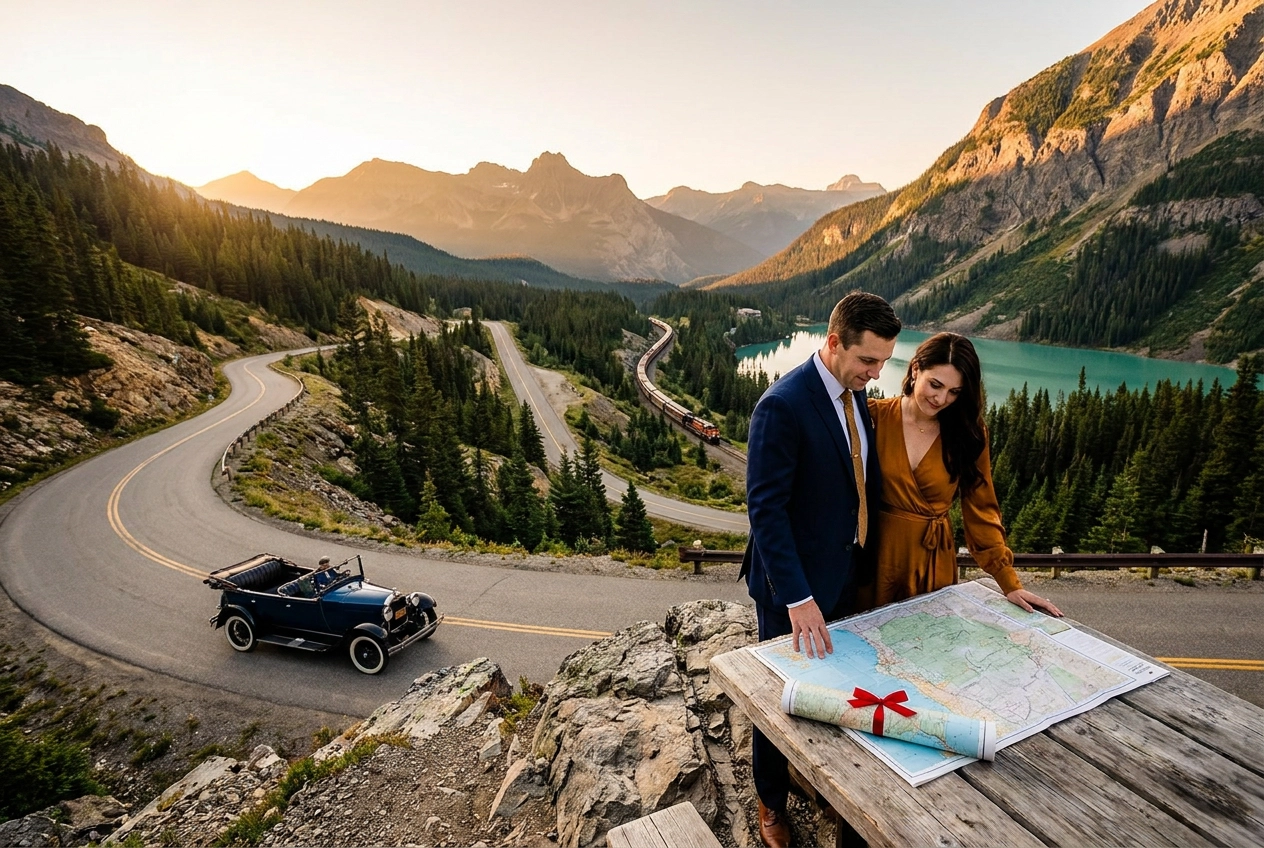
Most Banff and Lake Louise itineraries fail before the first hike begins. They fail at the planning stage, when travelers stack stops onto a map without asking which season they are visiting, when the reservation clock opens, or where they will sleep. Access to Lake Louise and Moraine Lake is reservation-driven, Moraine Lake Road is closed to personal vehicles year-round, and shuttle seats typically sell out well in advance. In other words, order and timing decide the trip far more than stop count.
This guide treats your week as a sequence, not a checklist. You will learn why order matters more than the number of stops, then work through three prerequisites: choosing the season, working backward from the reservation clock, and matching transport to your accommodation. From there, we set your base camp, time your starts around the lakes, sequence the peaks behind them, and give the towns their own slots. A sample seven-day plan shows how to split Days 1 to 3 and Days 4 to 7, and we close with where curated small group adventure travel removes the friction and which sequencing mistakes cost you a day.
Why Order, Not Stop Count, Decides a Banff and Lake Louise Week
Banff National Park recorded an all-time high of 4.5 million visitors in 2025, a 34% rise since 2010, according to Parks Canada. The week you sketch on paper competes with a crowd that shows up whether or not you planned for it.
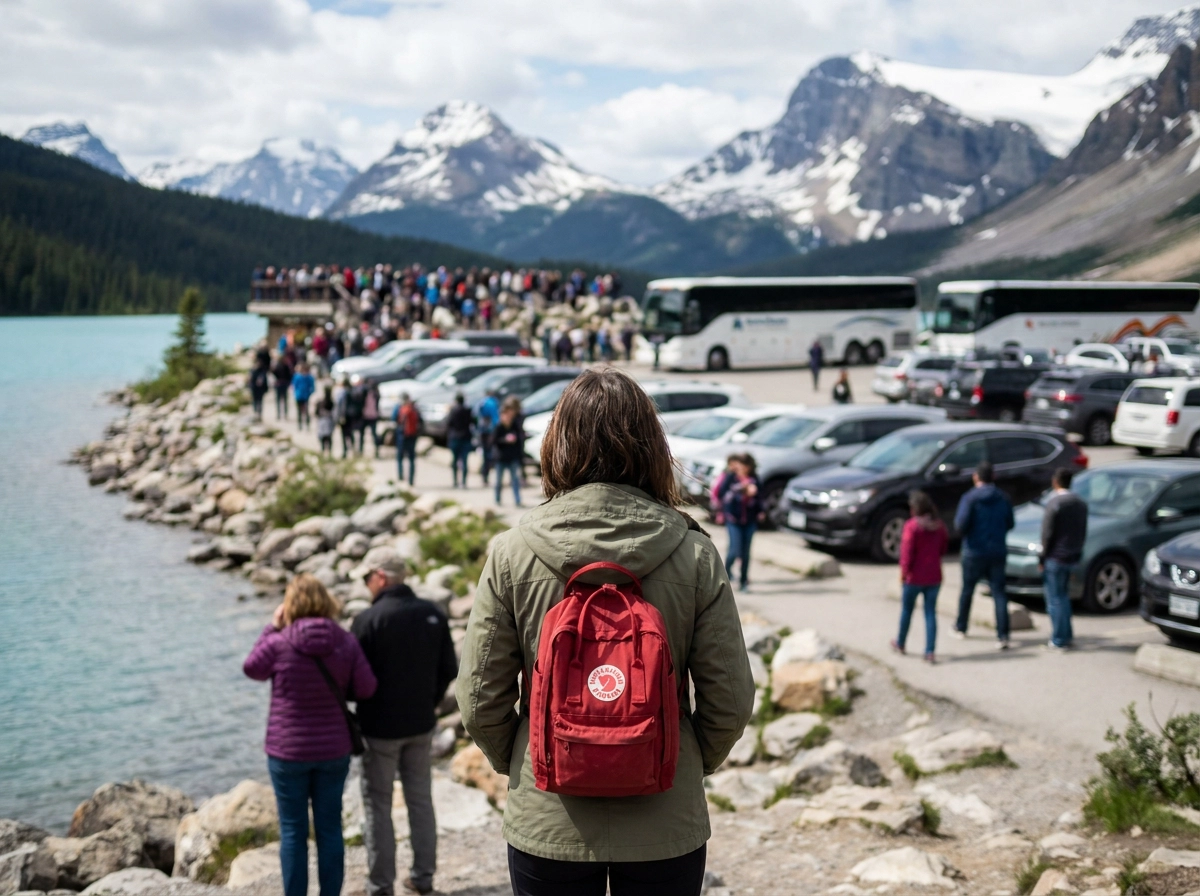
That pressure concentrates at the lakes. Traffic on Lake Louise Drive grew 70% between 2010 and 2019, peaking at 2.1 million vehicles. In summer 2025, roughly 1,000 personal vehicles a day secured parking at Upper Lake Louise, and 75% were turned away.
Rules have already narrowed. Personal vehicles were banned at Moraine Lake in 2023, after 85% of vehicles attempting that visit were turned away, as CBC reported. The direction stays unsettled: Parks Canada’s final engagement round on possible parking reservations and reduced vehicle access ran February 3 to March 9, 2026, and CBC reports the eventual approach is still unclear.
So the planning problem is not variety. It is order. In Banff and Lake Louise, season, start times, reservation windows, and where you sleep decide the trip far more than how many stops you stack into it. A well-sequenced seven days outperforms a packed one every time.
This guide follows that order: season first, reservations second, base camp third. The same sequencing discipline shapes other curated multi-day itineraries we build. Here it simply matters more, because access is capped.
Prerequisite 1: Choose the Season Before You Choose the Days
With the crowd math established, the first decision is not which day you visit the lakes. It is which season you travel in, because season decides what access exists at all.
Parks Canada notes that Lake Louise and Moraine Lake usually melt by late May, and that the alpine hiking season generally begins in late June. That gap is the real dividing line between a snow-view trip and a hiking trip.
Parks Canada’s published 2026 operating dates make the difference concrete:
- Lake Louise Lakeshore shuttle: May 15 to October 12
- Moraine Lake shuttles: June 1 to October 12, weather permitting
A May trip and a July trip do not offer the same access. Before June 1, Moraine Lake has no Parks Canada shuttle service, and high alpine trails are typically still snowbound. Early season trades access for breathing room: anecdotally quieter shorelines and potentially lower demand for lodging, though neither is guaranteed, with two of the trip’s headline options off the table entirely.
Mid-June through September opens the widest access window and brings the heaviest competition, so each reservation carries more weight in your sequence. If your dates are still flexible, weigh other trip options before committing to a peak-season week.
Treat these 2026 windows as calendar-specific. Plan around the season logic rather than one fixed date, so the sequencing advice still works when dates shift next year.
Prerequisite 2: Work Backward From the Reservation Clock
If season sets the window, reservations set the hour. Parks Canada requires a reservation for all of its shuttles, notes that seats typically sell out well in advance, and states that attempting to secure a seat on the day of travel is not recommended. Treat seats as a prerequisite, not a convenience.
The 2026 dates (April 15 launch, two-day rolling release) were set out in the season section; treat them as your calendar anchor.
Moraine Lake is not a drive-up stop. Moraine Lake Road is closed to personal vehicles year-round, and access is limited to Parks Canada shuttles, licensed commercial operators, and registered guests of Moraine Lake Lodge. Parks Canada directs visitors to CarFreeBanff.ca for the licensed operator list. That is where private shuttles and small group adventure travel tours stop being a workaround and become a workable plan, because someone else owns the reservation clock.
One cost to verify rather than assume: the Discovery Pass is listed at $71.50 to $167.50 CAD, and that listing does not state which sites each price covers. Confirm coverage for your specific travel dates before you build it into your budget.
With the clock handled, move to the next linked decision: where you sleep, and how you get from there to the shoreline.
Prerequisite 3: Match Your Transport to Where You Sleep
With the reservation clock handled, base camp becomes the next lock in the sequence, because where you sleep decides how you move. Roam (Banff) and Parks Canada shuttles (Lake Louise) are still the two options, as covered in the reservation section above. Treat base camp and transport as a single decision.
The alternatives narrow quickly. Hiking and biking round out the options, and personal vehicles work only for Lake Louise. Moraine Lake is off limits to them entirely, year-round.
The 30-to-60-minute queue noted earlier is real travel time, not a delay. Put it in the itinerary. Parking lots fill before sunrise and stay full until sunset in peak season, so an unplanned drive is a gamble rather than a fallback.
Lake Louise sits 55 km west of Banff on the Trans-Canada Highway. No source gives door-to-door drive times, so plan each day around distance plus a buffer rather than a precise minute count.
Finally, treat every access rule as a moving target. Parks Canada expects visitor and vehicle volumes to keep growing under its Visitor Use Management framework and the 2022 Banff National Park Management Plan, so recheck access rules before you travel and again once you arrive.
With that pairing settled, you can choose the base itself.
Step 1: Choose Your Base Camp Before You Book Anything Else
With transport matched to where you sleep, the next decision is where that sleep happens. Treat base camp as a logistics choice, not a ranking.
Banff town offers year-round public transit, deeper dining and lodging choice, and easier recovery days. The cost is a longer run west on lake mornings. Lake Louise village puts you closest to the lakeshore and to the Moraine Lake access point, an advantage that matters most when your reservation window starts early.
A split stay, part of the week in Banff and part near Lake Louise, often sequences better than one base because it shortens the mornings that demand pre-dawn departures. No official source compares base camps directly, so this trade-off rests on documented transit coverage and the 55 km separation, not on published rankings.
Because Roam runs year-round in Banff (covered in the transport section), the Banff base is the lower-risk default for non-drivers. Book those seats through the Parks Canada reservation portal as soon as your dates open.
Fix the base first. Start times, peak days, and every reservation that follows inherit that choice.
Step 2: Set Start Times Around the Lakes, Not Around Breakfast
Once your base is set, the day’s start time is logistics, not breakfast. Your reservation sets it.
Reserve the window you will actually make
Parks Canada requires reservations and seats sell out well in advance, so book the earliest window your group will genuinely commit to, then build the rest of that day behind it. A 6 a.m. slot is wasted on a group that will not leave Banff by 5.
On self-drive days, beat the lot
A personal-vehicle day at Lake Louise only works if you arrive before the lots fill, given the documented pre-sunrise fill pattern. No official source names an optimal arrival time, so work from that documented pattern: arrive before first light, or hold a reservation and skip the parking gamble.
Count the shuttle queue as travel time
Expect 30 minutes to one hour waiting for a shuttle, longer at high ridership. Put that time in the itinerary as real travel time, not an unexpected delay. That habit keeps a lake morning from swallowing the afternoon. The same discipline applies to any overseas adventure: confirm access logistics before you commit to a start time.
Keep the first lake morning short
Stack an ambitious hike on a pre-dawn departure and a seven-day plan can unravel by day three. Treat the first lake morning as reconnaissance: shoreline, photos, an early exit. Save the mileage for the peak days that follow.
Step 3: Sequence the Peaks Behind the Lakes, Never Ahead of Them
Alpine hiking season generally begins in late June, so a trip sequenced for early June should treat the lakes as the headline and keep high trails optional. Parks Canada notes many passes stay snow-bound into late June, with most alpine passes snow-free by mid-July, so check trail and snow conditions before committing your group to anything above the shoreline.
Place the biggest hike the day after a lake day, once reservations are handled and you know how your group is handling the altitude. Then alternate lake logistics days with peak days. That rhythm spreads the early starts and keeps the hardest day from landing right after arrival.
Weather is the one variable you cannot book, so reserve one flexible day per week instead of filling all seven and hoping nothing moves. Parks Canada warns it can snow in any month. A trip planning process that builds in slack protects the lake mornings you already reserved.
If your group wants route-finding taken off its plate, this is the natural point where guided adventure travel or a curated small group adventure travel trip removes real friction. Couples chasing shared trail days can pair that structure with a curated adventure trip built around trail time rather than resort downtime. Once lakes and peaks sit in that order, the towns become the buffer that protects both.
Step 4: Give the Towns Their Own Slots in the Sequence
Once the peaks are placed behind the lakes and one flexible day is protected, the towns move from backdrop to active buffer. Banff works best in two slots: as the arrival base, where a slow first afternoon absorbs a delayed flight or a rental-car line, and as the night before departure, when you want flexibility rather than a fixed reservation you might have to forfeit.
Banff town days can run car-free. Roam’s year-round service (noted earlier) makes these genuinely car-free days. Groceries, dining, and a recovery afternoon stop competing with the parking pressure you dealt with on lake mornings.
Lake Louise village pairs with the lakeshore. For 2026, the Lake Louise Lakeshore shuttle runs May 15 to October 12. Sleeping west of the lakes means shorter pre-dawn runs to reserved seats, and Roam can connect Banff to the Community of Lake Louise if you would rather not drive the transfer.
When weather or a sold-out reservation window forces a change, shift a town day forward or backward and protect the lake mornings instead. The town is the movable piece; the lakes are the fixed ones you booked around.
Finally, resist treating Banff and Lake Louise as one destination with two names. They sit 55 km apart on the Trans-Canada Highway, and that separation is exactly why order matters: which end you sleep in decides how early you rise and how much of each day the drive consumes. With the towns placed, the week finally has a shape to sequence.
A Sample Seven Day Sequence for Banff and Lake Louise
With the towns positioned as buffers, the week’s spine falls into place: arrival and town, lakes, peaks, then one flexible day. This sample assumes a July or August trip, when both lake shuttle windows are open and alpine trails are generally in season.
Four rules keep the order intact:
- Log every reservation before departure. Same-day booking is not recommended, so a seat hunt on the road costs you a morning.
- Take the lakes early, while legs are fresh and shuttle windows are widest.
- Place peaks behind lakes, never ahead of them.
- Hold the final day as true buffer, not as filler for one more stop.
When something shifts, move the closed day rather than deleting it. A washout, a sold-out window, or a change in access rules then relocates a lake morning instead of erasing it.
Days 1 to 3: Land, Settle, and Take the Lakes Early
The seven-day sequence above opens on arrival, lakes, and low mileage. Execution in the first three days is simple, but the order matters.
Day 1: Land and base in Banff town. Collect groceries, water, and fuel before you settle. Leave the vehicle parked and use Roam Public Transit, which serves Banff-based visitors year-round. Do not attempt a lake on arrival day; save the 55 km run west for a morning you have reserved.
Day 2: Lake Louise Lakeshore. This is your first reserved lake morning. Walk the shoreline, keep it short, and head back early. An early return protects the next day and costs you nothing in scenery.
Day 3: Moraine Lake. Moraine Lake Road is closed to personal vehicles year-round, so go by Parks Canada shuttle or a licensed commercial operator. Budget 30 to 60 minutes for shuttle queue time, Parks Canada’s own expectation, as real travel time. Note that Moraine shuttles for 2026 run June 1 to October 12, so this day cannot be scheduled in May.
Reservations. Seats open April 15 at 8 a.m. MDT (40% upfront, 60% on the rolling 48-hour window), book as soon as that date arrives.
Keep days 1 through 3 free of long hikes. The group adapts first, then the alpine days begin.
Days 4 to 7: Peaks, Towns, and the Buffer
With the first two lake mornings behind you, Days 4 to 7 shift from access logistics to pacing.
Day 4 is your first substantial hike. Match the route to your group’s fitness, not to a bucket-list peak, and leave nothing reserved behind it so the day can breathe. Mixed-ability groups should align expectations before trail selection.
Day 5 returns to the lakes: a second reserved morning, or the alternate lake window if weather moved Day 2 or 3. Keep the same early shuttle pattern and budget the documented 30 to 60 minutes of shuttle queue time.
Day 6 is a town day in Banff or Lake Louise village. Use year-round transit and avoid parking pressure entirely. Leave the vehicle behind.
Day 7 is buffer and departure. Move anything cancelled earlier into this slot instead of adding a new stop. If a future season introduces parking reservations or reduced vehicle access, this is the day that reshuffles most easily without losing a headline experience.
Where Curated Small Group Adventure Travel Removes the Friction
Your buffer day is built, but one layer still decides whether the week holds: not scenery, but reservation timing, shuttle windows, start times, and a Moraine Lake road closed to personal vehicles.
The access friction covered in the prerequisites, sold-out shuttle seats, a Moraine Lake road closed to personal vehicles, lots full before sunrise, is exactly what a curated operator can absorb. A curated departure with a licensed commercial operator removes the need to navigate Moraine Lake Road access independently, since those operators hold the required licence, though you should confirm with any operator exactly which logistics they handle, including reservation management.
For mixed-experience groups, a hybrid is practical. Book adventure travel tours for the lake mornings, when access rules are strictest, and self-drive the town and shoulder days, where flexibility matters more and costs stay visible. The same discipline applies whether you are ordering alpine mornings or deciding where to book your first surf trip: check access rules first, then preferences.
Where a Planning Partner Fits
Smart Alec Travel is a travel service offering premium, curated getaways for individuals, couples, and corporate clients, including adventure seekers, which places it as a planning partner for this kind of sequence rather than a fixed Banff itinerary. Build the plan around the schedule, not a template.
Confirm what any operator includes, especially transport between bases. Whatever route you choose, verify the details: shuttle and parking pricing is not stated in the sources used here, and Discovery Pass site coverage should be checked before you count it as your entry, Park passes.
Next, the sequencing mistakes that quietly cost a day.
Sequencing Mistakes That Cost You a Day in Banff and Lake Louise
Curated logistics absorb some of this friction, but they cannot rescue a sequence built on false assumptions. Each of these five mistakes costs a full day.
Booking shuttle seats on the day you travel. As covered in the prerequisites, Parks Canada does not recommend same-day booking and seats sell out well in advance, the April 15 reservation window is your real starting line.
Treating Moraine Lake as a drive-up stop. The road has been closed to personal vehicles since 2023, with access limited to Parks Canada shuttles, licensed commercial operators, and registered lodge guests, and the turn-away rate before that ban reached 85%.
Assuming a pre-dawn start guarantees Upper Lake Louise parking. In summer 2025, roughly 1,000 vehicles a day parked there and 75% were turned away. The Lakeshore lot fills by sunrise and stays full through daylight hours.
Stacking two lakes and one peak into a single day. Shuttle queues alone consume at least 30 to 60 minutes before your first trail step, and that is before the ride to the lake, and that hour is where an ambitious day quietly breaks.
Building the week around stop count with no flexible day. Nothing absorbs weather, a sold-out window, or a mid-trip access change. Parks Canada’s own guidance is to arrive with a plan and build flexibility into the schedule.
Reorder these five, and the rest of the week stops fighting you.
Conclusion: In Banff and Lake Louise, the Order Is the Itinerary
The mistakes above share one root cause: treating the week as a list of stops rather than a sequence. Reverse that, and the plan holds.
The reservation clock, April 15 at 8 a.m. MDT, is your true starting line, not the itinerary.
Decide your base before your activities. Banff town delivers year-round transit and easier recovery days, Lake Louise village shortens lake mornings, and a split stay buys both.
Then alternate lake logistics days with peak days and protect one buffer day. That single loose day is what lets a washout move the plan instead of canceling an experience.
Finally, recheck access rules before you travel. Parks Canada’s direction on parking reservations and reduced vehicle access remained unresolved after the February to March 2026 engagement, so confirm current rules rather than relying on last year’s plan.
Order is not a detail in Banff and Lake Louise. It is the trip.